





Before You Start: Profile, Security, and Calm in Your Session
A session doesn't start with a game, but with your basic settings. Imagine you finally have a free evening and discover your email is no longer accessible. Then you're busy with recovery instead of relaxation.
Start with a strong password and enable an extra verification step if possible. Then immediately look at your limits: deposit limit, session timer, or break. If you play in Netherlands, do so only if you are 18 years or older and within the rules that apply to you.
Password Choice Without Hassle
Don't choose something you already use, however practical it may seem. Imagine using the same combination in multiple places and it leaks somewhere. Then someone can try to access multiple accounts at once.
Make it easy for yourself: use a password manager or a long sentence you can remember. Keep recovery options and backup codes safe, and only change your password when you can sit down calmly to do it.
Recognizing Sessions on New Devices
New devices or browsers can trigger extra checks. Imagine logging in on a work laptop today and playing at home on your own computer tomorrow. The system may then ask for confirmation again to protect your account.
Keep track: preferably use your own devices, avoid shared computers, and log out when you're done. If you do play temporarily, don't change important settings during that session.
Logging In On Mobile And Desktop: What Really Changes?
Mobile is fast, but more susceptible to interruptions. Imagine switching from Wi-Fi to 4G just as you're confirming something. The page will reload, making it seem like your action is gone.
On mobile, a fixed order helps: first check the account screen, balance, and limits, then open a game. On desktop, you can often navigate faster, but watch out for browser extensions and auto-filled fields that can cause errors.
Also watch out for small input errors. Imagine your keyboard is set to a different language and you unconsciously change characters. It will seem like your password is wrong, even though you're typing differently. Check caps lock, autocorrect, and if your password manager is picking up the correct entry.
When the Page Keeps Loading Or Buttons Don't Respond
Double-clicking feels logical, but it stacks actions. Imagine confirming multiple times and then receiving notifications as if you acted twice. Wait a few seconds, refresh once, and then close the tab completely if it hangs.
Next, try a private window or restart the app, especially after a network change. This usually gets you back into your session cleanly, without extra stress.

Kokobet Casino Sign Up: Registration In Practical Steps
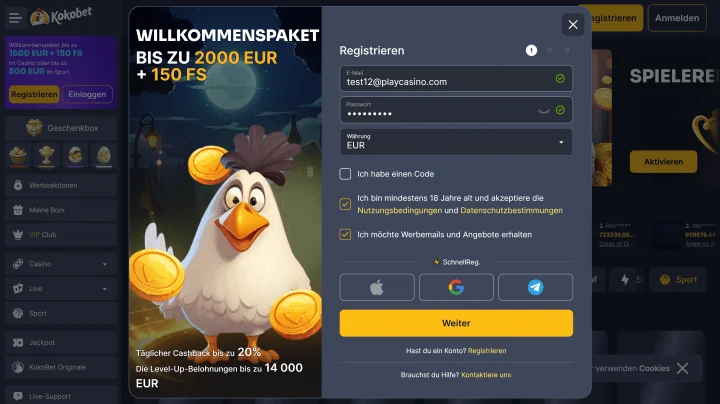
Creating an account is mainly about consistent entry. Imagine typing data hastily and later finding out your profile deviates slightly from what you need for verification. This costs you time when you actually want to play.
Use an email address you can access immediately and choose a unique password. Calmly check your personal details, without relying on autocorrect. Then, immediately set your limits – this makes your playing behavior predictable, even when you're tired.
Quick Setup For Limits And Notifications
Many players skip this and only notice it later. Imagine thinking 'just one more' and then looking up to find it's suddenly late. A session timer gives you a break without argument.
Choose one or two limits you actually use, and keep notifications simple: one clear warning is better than a stream of pop-ups.
Set Up Recovery Options Before You Need Them
You hope you never use them, but they prevent panic. Imagine your phone breaking and suddenly being unable to access your mailbox app. You'll want an alternative recovery path ready.
Choose one backup option, test it once, and store the info securely. After that, you don't have to think about it – until you're glad it's there.
Deposits And Budget: From First Step To Daily Routine
Money management determines whether playing remains relaxing. Imagine wanting to start quickly and choosing a method that requires extra confirmation when you don't have time for it. A simple deposit then becomes a moment of frustration.
Choose one payment method you know and use it consistently. Agree with yourself on your weekly budget and divide it into short sessions. If you notice yourself clicking faster, that's often your signal to stop, not to push through.
Situation | What You Do | What to Consider | Helpful Habit |
|---|---|---|---|
First deposit | Choose method and confirm | Amount and own limit | Finish before opening a game |
Extra control | Confirm your identity | Consistent data | Do this when you are calm |
Plan withdrawal | Check your settings | Method can make a difference | Use one preferred method |
Start session | Set timer or break | Pace and focus | Take a 5-minute break afterwards |
Making a Deposit Without Impulse
Imagine you just see a win and think “I’ll deposit some more”. You feel rushed, and that’s exactly where impulse arises. Stop first, check your limit, and only then choose an amount that fits within your framework.
Complete the payment and check if your balance has been updated before proceeding. This mini-ritual prevents hassle halfway through.
Playing With A Timer Instead Of On Feeling
A timer is a reminder, not a prohibition. Imagine you wanted to play for five minutes, and you look up and it's an hour later. With a timer, you get a gentle interruption that helps you choose.
Keep it small: one timer, one break, done. If you still feel like it afterwards, consciously start a new session.
Choosing Games With An Overview, Not Under Pressure
The selection can be large, and then you quickly open “something”. Imagine starting a game without looking at the rules and clicking mainly because it moves. That feels pressured and unclear.
Choose with intention: category, pace, bet. First test the controls, so you know what buttons do and how rounds proceed. Many players only find peace in their game when they use one fixed set of favorites.
Using Favorites And Search Filters Smartly
Imagine having to search for the same two games every evening. You lose time and end up making impulsive choices faster. With favorites and filters, you build your own short list.
Create a shortlist that suits your mood: fast, calm, and one “once in a while” option. This way, you won't get lost when you have little time.
Bet Choices That Fit Your Budget
Imagine that after a loss, you automatically increase your bet without a plan. You think you're "getting it back," but you're actually driven by emotion. Choose a base bet and a maximum you won't exceed beforehand, even when you become impatient.
If you want to play at higher stakes, plan it as a separate session with a smaller time block. This way, your choice remains conscious, not reactive.
Withdrawals and Verification Without Surprises
Payouts work most smoothly if you calmly go through the process once. Imagine requesting a withdrawal and an extra step appears, while you thought everything was ready immediately. This often happens with a first request or after a change.
Keep your profile information consistent, preferably use one method, and provide documents that are clear and complete when needed. Processing can vary by method, so stick to one request at a time and don't change course along the way.
It's better not to plan these kinds of steps at midnight. Imagine you want to finish something quickly and you take a photo of a document in poor light. This often leads to an extra round because it's not clear enough. Take five minutes in daylight, check the details, and you'll save yourself waiting later.
How to Communicate with Support When Something Gets Stuck
Imagine you just write "it doesn't work." Then someone has to guess, and that takes time. Briefly write what you did, what you expected, and what happened, plus whether you used mobile or desktop.
Stay in one conversation and add context instead of opening new tickets. This keeps your solution organized.
Support, Time-Out, and Self-Exclusion in Plain Language
Support is also there to clarify choices. Imagine you're unsure about a setting and you start experimenting yourself during a session. You often make it unnecessarily complicated.
A time-out is useful if playing becomes too automatic: busy week, little sleep, many distractions. Self-exclusion is more serious and suitable if you really want to take a break. Make it practical: choose a period, plan what you will do with that time, and don't let your decision depend on a snapshot.
One more simple check: after each session, ask yourself why you stopped. Imagine you stop because you're irritated, not because you're satisfied. That's useful information, because then the next step is usually a break instead of a new session. If you stop because you've achieved your goal, that's precisely the moment to repeat the ritual.